What if AI could reveal a true story about one of your forgotten ancestors?
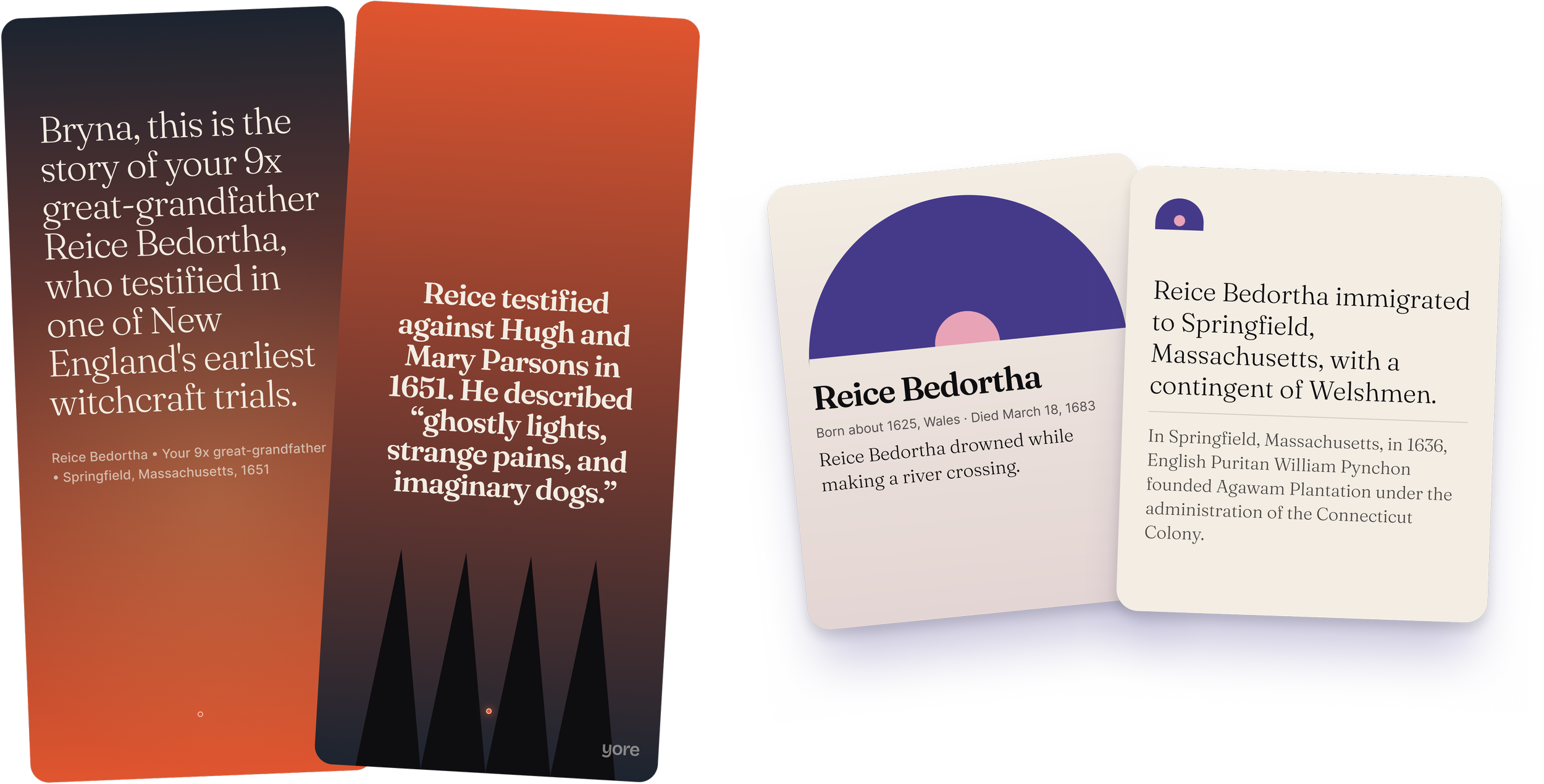
Two Yore results for my 9x great-grandfather, Reice Bedortha. Left: cards written with original engine. Right: the faster version, optimized for two quick facts and one line about the world they lived in.
Role: solo designer and builder
2026 Timeline
April - August: Claude prototype.
August-September: Full narrative engine in Lovable
October: Claude prototype, SheBuilds Oct 15-17 for Yore Lite. I did not place in the top 30.
Try Yore Lite at yore.family.
The original version is available at discover.yore.family. Use code findyore72 to try the compromised pipeline.
It started with a witchcraft trial
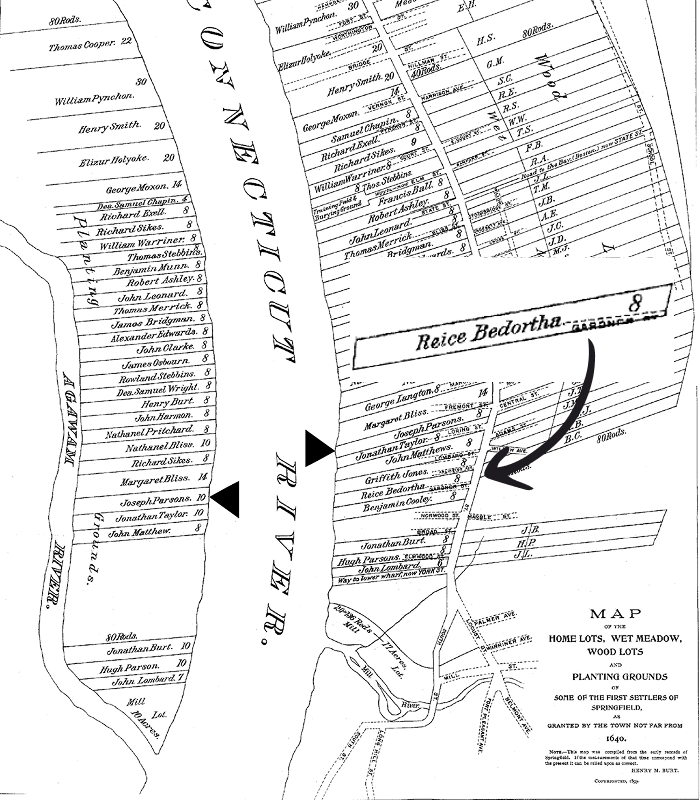
I discovered that my ninth great-grandfather, Reice Bedortha, had an incredible story. He immigrated from Wales in 1640, testified in a witchcraft trial, and ultimately drowned in the Connecticut River alongside his son, his daughter-in-law, and their one-month-old daughter. His story was stranger and richer than anything I’d expected to find in my family tree. What other stories were waiting for me to discover?
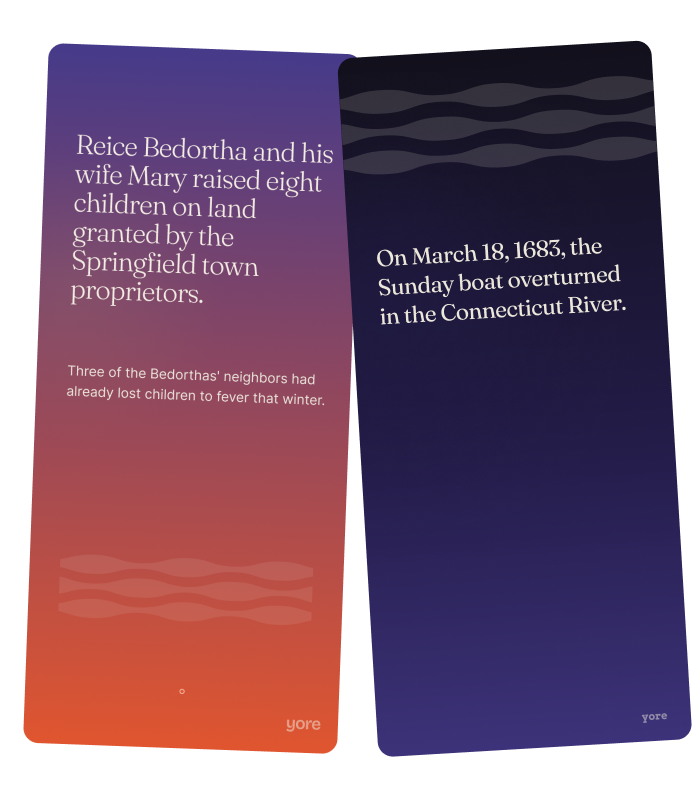
A family story you could feel, not just read
I wanted the surprise of discovering an ancestor to feel surprising, cinematic, like true details were being pulled from the annals of time. But also fun—something closer to Spotify Wrapped than a genealogy report. Something short, beautifully composed, and worth sending to a relative.
A story engine built for rich or thin stories
Some ancestors left extraordinary stories behind. But the average person’s history is quieter and is often told through scattered documents. I worked through different narrative structures, editorial rules, and context work to see whether both types of stories would give meaningful experiences.
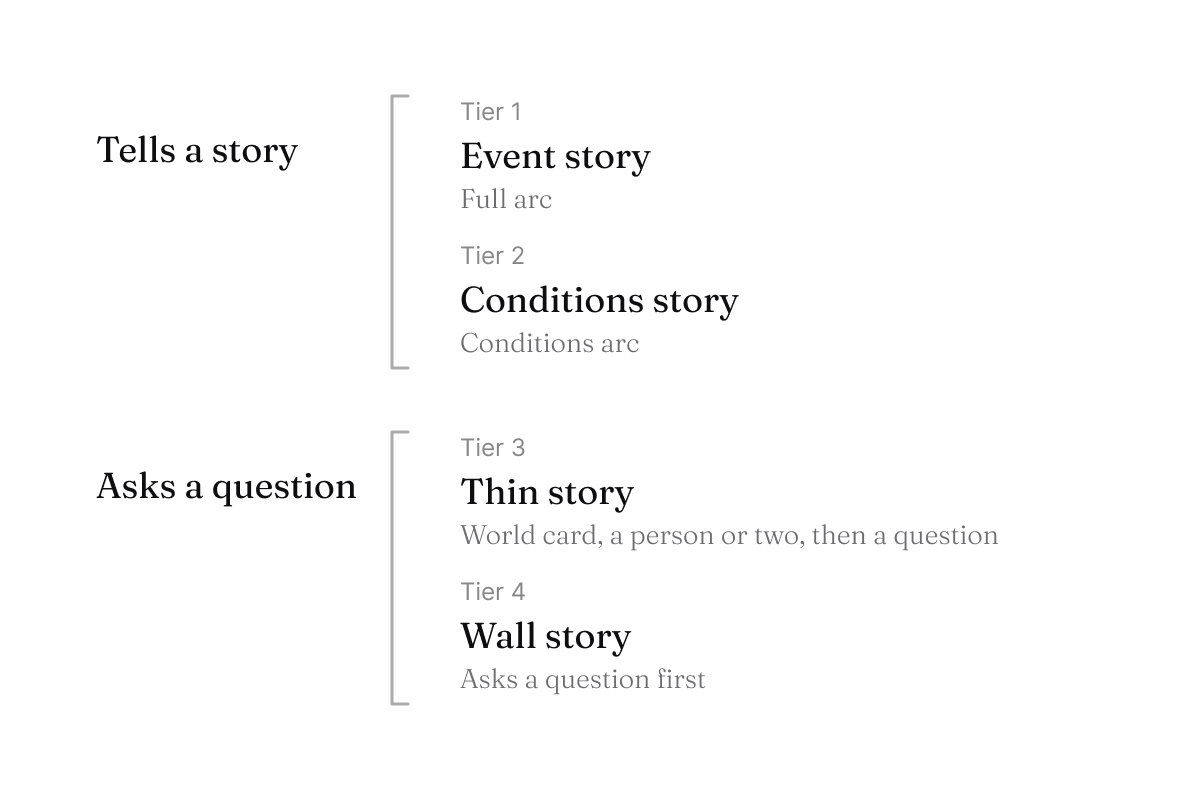
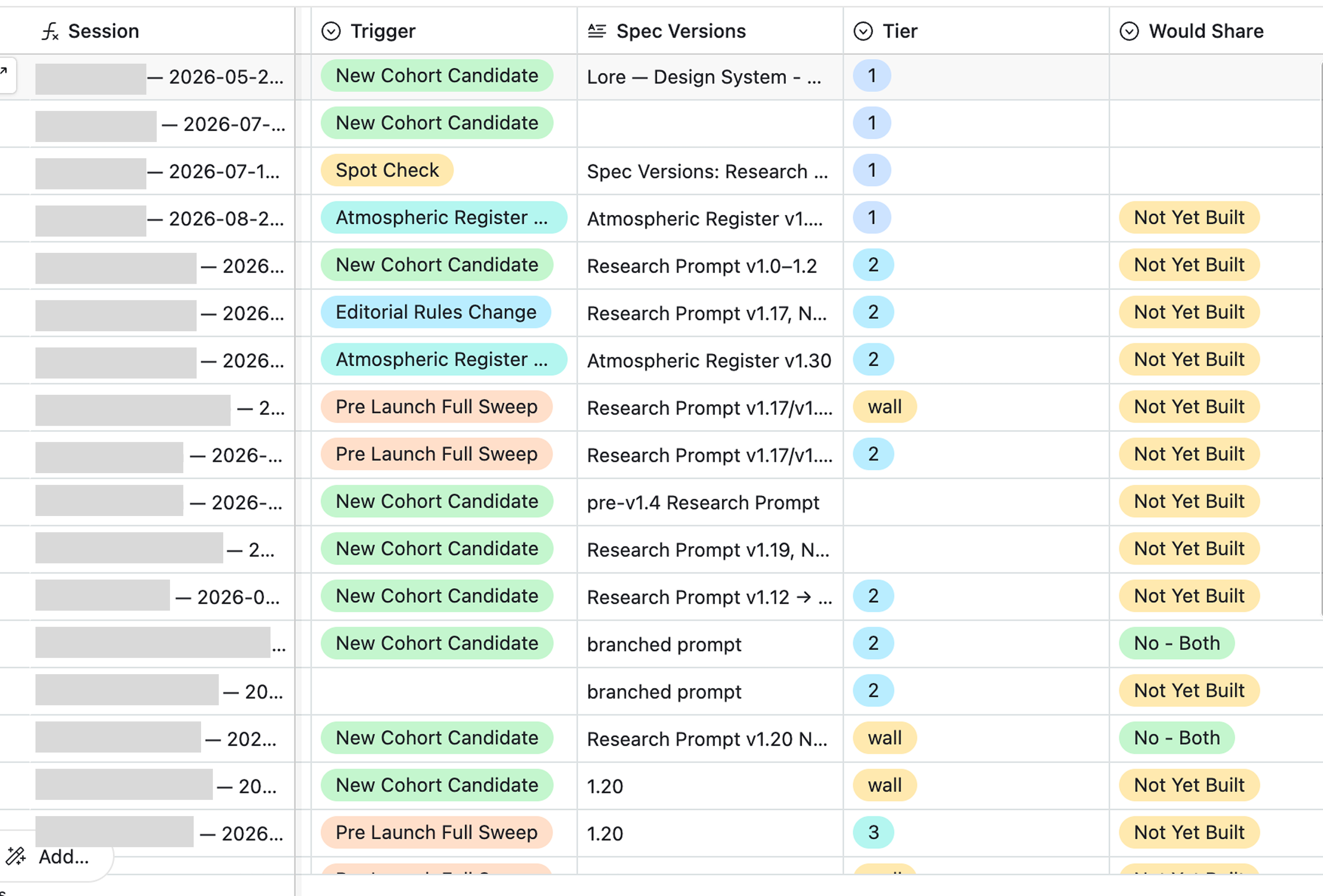
QA results tracker
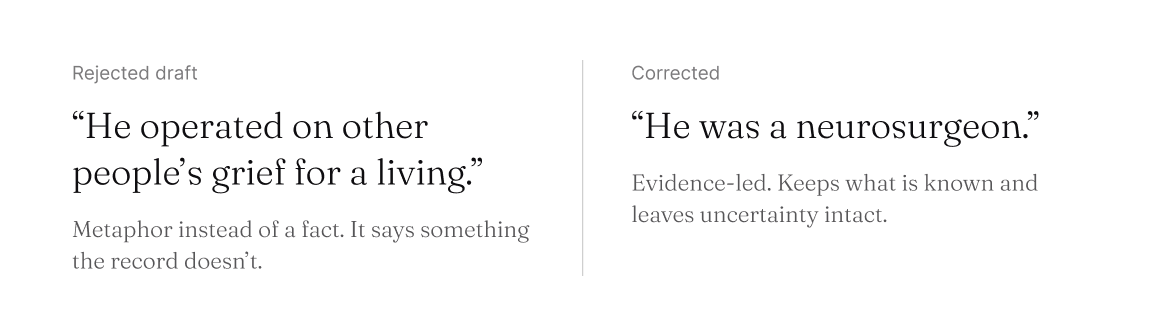
The editorial dilemma: true facts can still tell a false story.
Testing quickly showed that AI could build a convincing emotional arc from real facts, while also inventing odd connections or describing events using unclear turns of phrase. I set rules to distinguish narrative composition from narrative invention.
“The story is that there is no story”
Once I started prototyping using Lovable, my story rules started to degrade. The model started to edit and backfill stories in efforts to be more truthful, and stories not only lost their rhythm, they were also taking much longer to build. My husband — one of my early users — teased me that every story was about the lack of story. And it was true.
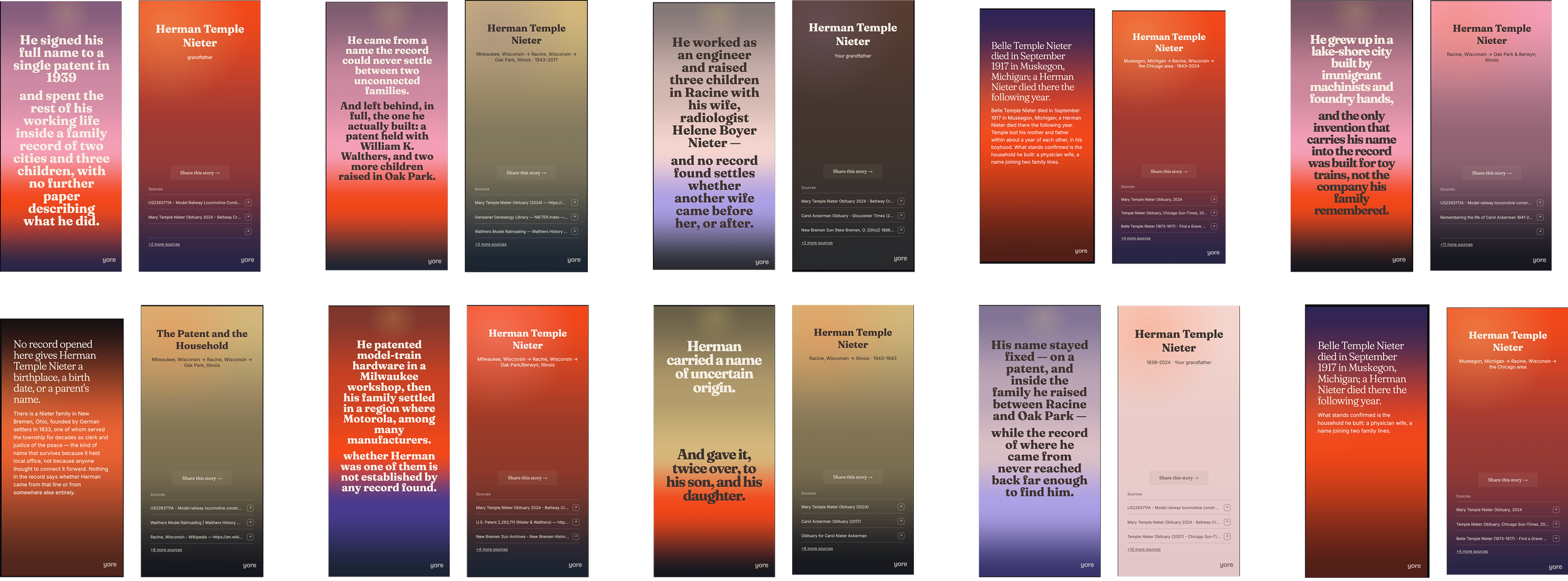
What if I tried to stop telling a deep story?
I considered a different, lightweight experience that would be more like discovering ancestors. Some might have a story; others not. Ancestors with a good story point to a viable longer story.
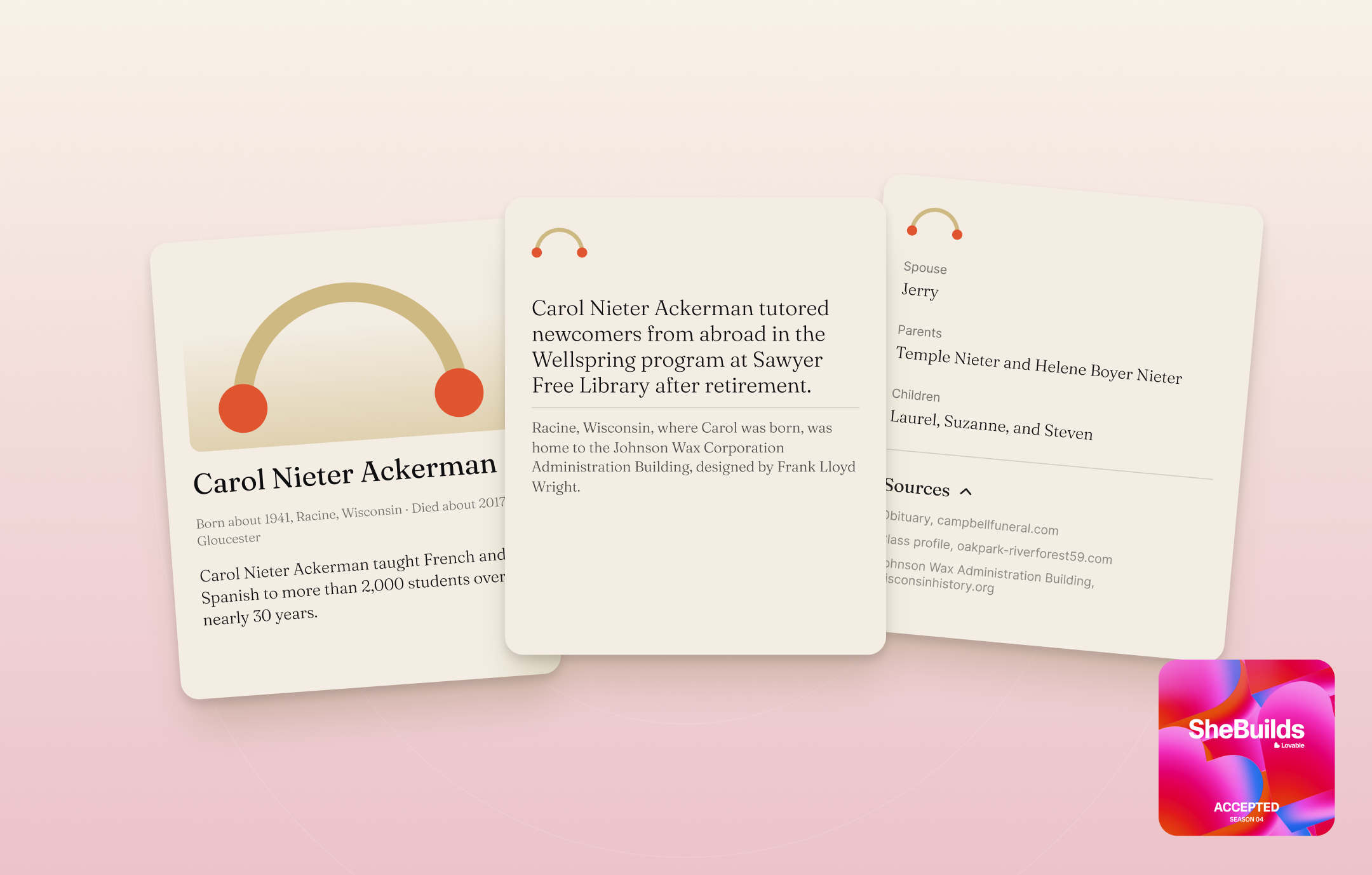
For SheBuilds, I built a faster, fact-first version. Instead of a long narrative, Yore Lite offered small discoveries and family connections, with source verification built into the experience.
QA results tracker
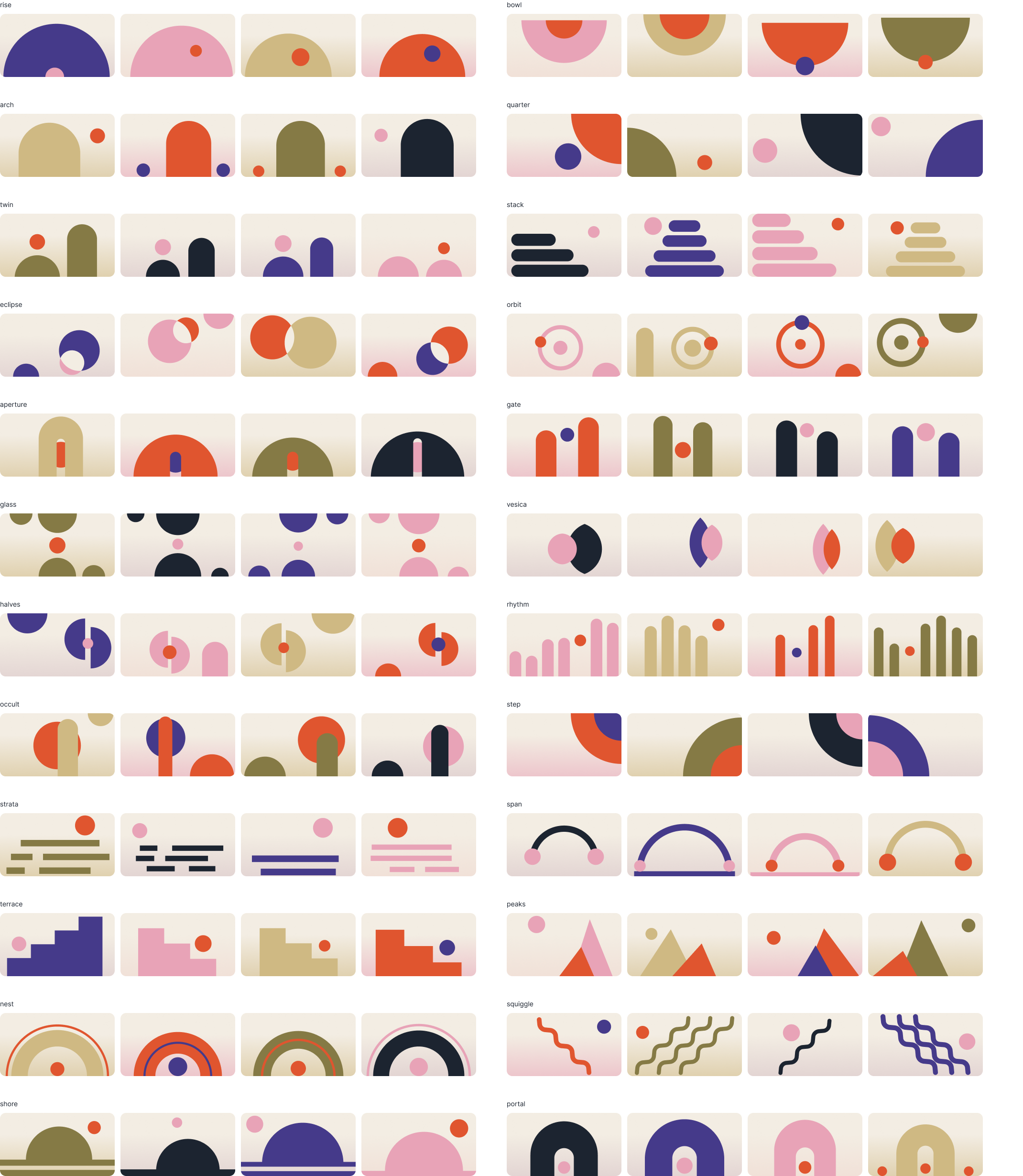
A new look and feel, augmented with a set of illustration recipes to keep each card unique.
I set a bar and missed it
Yore’s ancestor experience depends on finding one verified person with a “neighborhood” of people around them. Without those connections, there isn’t enough to make the experience interesting.
That was still an untested assumption when I pitched Yore Lite to SheBuilds. Before building, I tested ten ancestors against open sources and set a benchmark: at least six needed to work, or I’d have to rethink the promise.
When I missed the mark, the promise changed to “one person, one honest story” replacing of the promise of instant tree building.

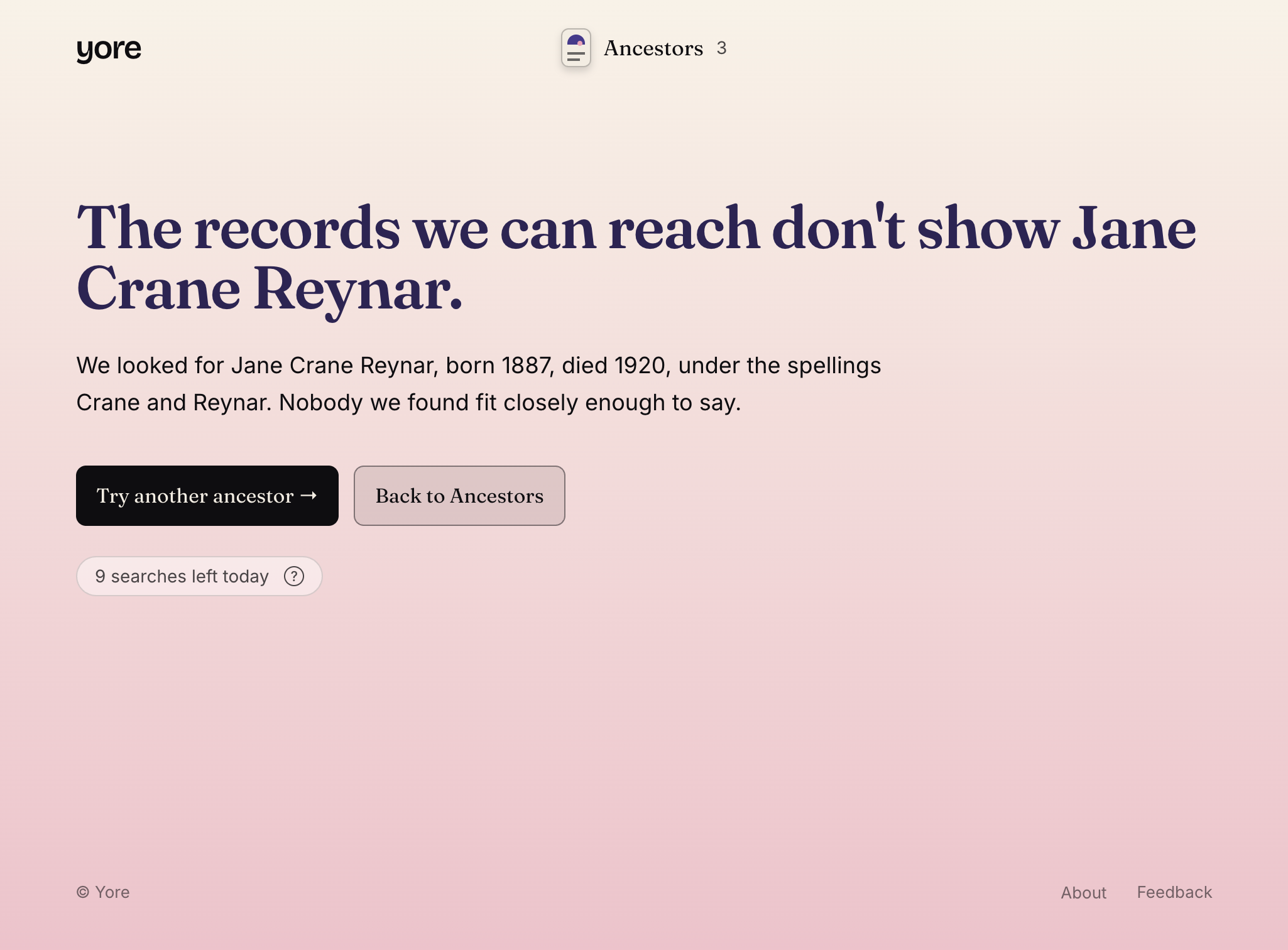
Verified family links need records I couldn’t reach
Lite promised to identify someone and place them in their family. That takes records most sites keep behind paywalls: census, ship manifests, the trees themselves. I had WikiTree, which is volunteer-built, and web search. Search found more, but the best sources block automated access. By hand, I could find 8 of the 10.
What’s Next? Start with what they already know
Instead of using dates and names, we can ask for a story or anecdote. There’s still an underlying lack of sources, but more details would allow the web search to scan more widely. This is a hyphothesis. Next we can ask users to upload a tree if they have one, or other family sources they may have.
I’d like to rebuild the narrative engine using what I’ve learned in my first phase. With a wider scan against scant sources and an improved engine, Yore would be a full realization of the vision I had after learning about Reice Bedortha.